
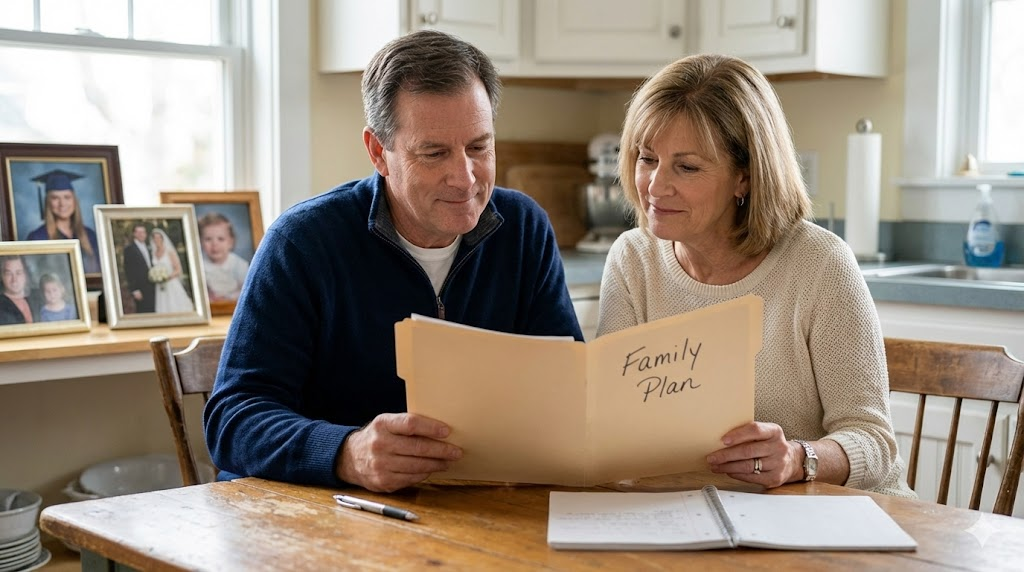
The quiet worry I hear most from couples is not about taxes or probate. It is this: if I die first, will my kids still end up with what we built?
People apologize for asking. They should not. That worry is not mistrust. It is love trying to do a job the law is not built to do on its own.
Here is how it goes wrong. A man in Marshfield dies and leaves everything to his wife. Four years later she remarries. She and her new husband sell the house and buy a place together. Ten years after that, she dies. The new husband owns the house. The first husband's kids find out at the second funeral. Nobody did anything wrong. The money just went where life took it.
That story runs both ways. On the South Shore, a lot of the surviving spouses are wives who outlive firefighter husbands. Wherever I say "she" below, read it either way.
What goes wrong with no plan
Remarriage. Your spouse inherits everything. Years later she remarries. If she dies without a new will, Massachusetts law may give a big share to her new husband. If she writes a new will for her new life, her new husband and his kids may come first. All of it legal. All of it her right, because the money is hers now.
Slow drift. Even with no remarriage, money moves. The new grandkids need tuition help. A refinance shifts things around. By the time your kids inherit, what is left may look nothing like what you left.
Distance. Your kids and your surviving spouse grow apart. Not on purpose. Time does it. By the second death, the inheritance question is awkward, and awkward turns into conflict.
None of this is certain. All of it is preventable.
The two traps
Leaving everything outright and hoping. This is the default for first marriages, and in a first marriage with all shared kids it often works. In a blended family, or any family where one spouse may outlive the other by twenty or thirty years, hoping is not a plan.
Locking everything down. A couple sees the risk and writes a plan so tight the surviving spouse feels like a guest in her own life. She cannot sell the house without the kids' permission. She cannot touch principal without a trustee's sign-off. On paper it is protection. In practice it feels like being treated as a threat by the person she loved most. I have seen it wreck relationships between a stepmother and stepchildren who had been close.
Neither trap is necessary. The middle path, guardrails instead of handcuffs, is almost always possible.
What guardrails look like
1. Separate what your spouse needs from what your kids inherit
Your spouse's security comes first while she is alive. Her access to income, and to principal when she really needs it, has to be real. Not for show. She should be able to live her life without asking permission for ordinary things. Your kids' inheritance comes after she is gone. The plan makes sure what is left goes to them, not to a new spouse or a new family.
2. Use a trust to make it stick
When the first spouse dies, that spouse's share goes into a trust for the survivor. She gets the income. She can live in the house. She can use funds for health and support. When she dies, what remains in that trust goes straight to the first spouse's kids. It does not pass through her estate. Everyone knows the plan. And nobody is asking her to keep a promise in her own will that her late husband could never enforce.
3. Spell out what she can and cannot do
Can she sell the house and move? Usually yes, with the money staying in the trust. Can she use principal for a medical emergency? Yes. Can she use principal to bail out a new husband's business? That is where the trust should be clear. A thoughtful plan says no, or says yes only on specific terms, and explains why.
4. Pick a trustee who can do the job
A trustee in a blended family makes judgment calls between people with competing interests. That is a real skill. Sometimes it is a trusted friend with good sense. Sometimes a professional. Sometimes a family member paired with a professional. I cover this in the decision-makers article. The best plan in the world fails with the wrong trustee.
5. Match your beneficiary forms
Life insurance, retirement accounts, and annuities pass by the beneficiary form, outside the trust and outside the will. If your retirement account still names your spouse outright, the trust never sees that money. The plan has a hole in the middle.
A note on the surviving spouse's legal rights
A surviving spouse in Massachusetts can claim a share of the estate even if the will leaves her out. A second spouse who is cut out can use that right to disturb the plan. The right is smaller here than in many states, but it exists. For some blended families, a prenup or a postnup is part of the plan.
The conversation
Every blended-family plan I draft has a moment where I tell the couple the hard part is not the document. It is the conversation.
The two of you have to talk about this honestly. One says, "This is what I want if I go first." The other listens without flinching. You work through the spots where you do not agree. Couples often find they have been assuming different things for years.
In many families, the adult kids should hear some version of it too. Not a vote. Just enough that they are not blindsided later. When a widow remarries and the kids learn for the first time that Dad set up a trust nobody mentioned, the trust does its job, but the relationships can still crack. A short, honest talk while both parents are alive prevents that.
The mistakes I watch for
Assuming love is enough. It is, on the day the plan is signed. Plans have to hold up for decades. Documents carry that weight. Love alone does not.
Overcorrecting. If your spouse feels treated like a suspect, the plan has failed on something that matters as much as the money.
Co-trustees. A surviving spouse and the first spouse's adult kids, forced to agree on every decision, is the "two captains" problem in the setting that handles it worst.
Beneficiary forms that do not match. Easy to miss. Hard to fix after the fact.
Never funding the trust. If the house and accounts were never retitled into the trust before the first death, the trust cannot protect them. I cover this in the will-versus-trust article.
The real test
Twenty years from now, your surviving spouse should be able to tell the story of her life and feel respected. Your kids should be able to tell the story of their inheritance and feel that your wishes were honored. Both. At once.
A plan that only protects the kids is cruel to the spouse. A plan that only protects the spouse is naive about the kids. A plan that holds both is work. It is worth the work.
I offer free consultations for families across the South Shore and South Coast. We will look at your situation, talk through what fits, and I will tell you honestly what I would recommend. No sales pitch. No pressure. Just a clear answer.
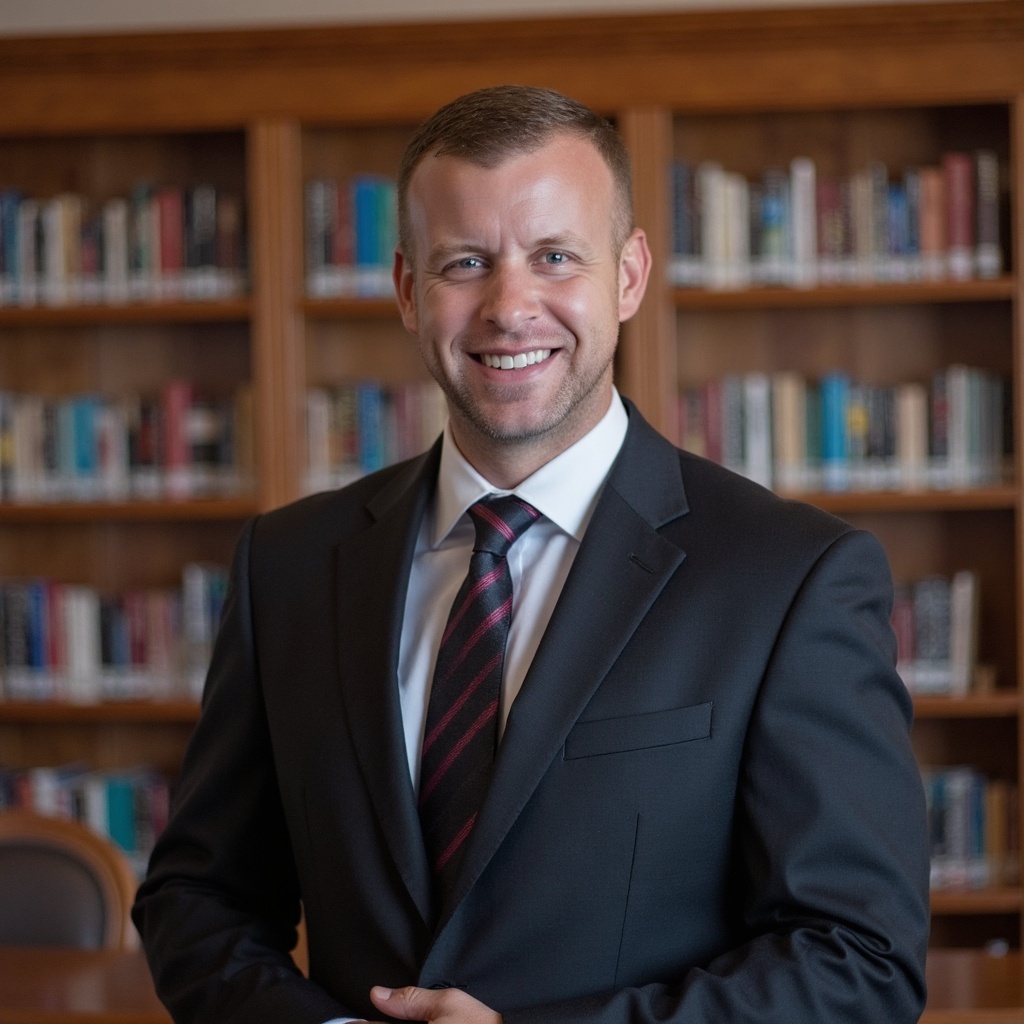
Jason Cullen, Esq.
Massachusetts estate planning and probate attorney serving the South Shore and South Coast. Career fire captain, paramedic, and Army veteran. Author of the Massachusetts Trustee Handbook.
About Jason →