
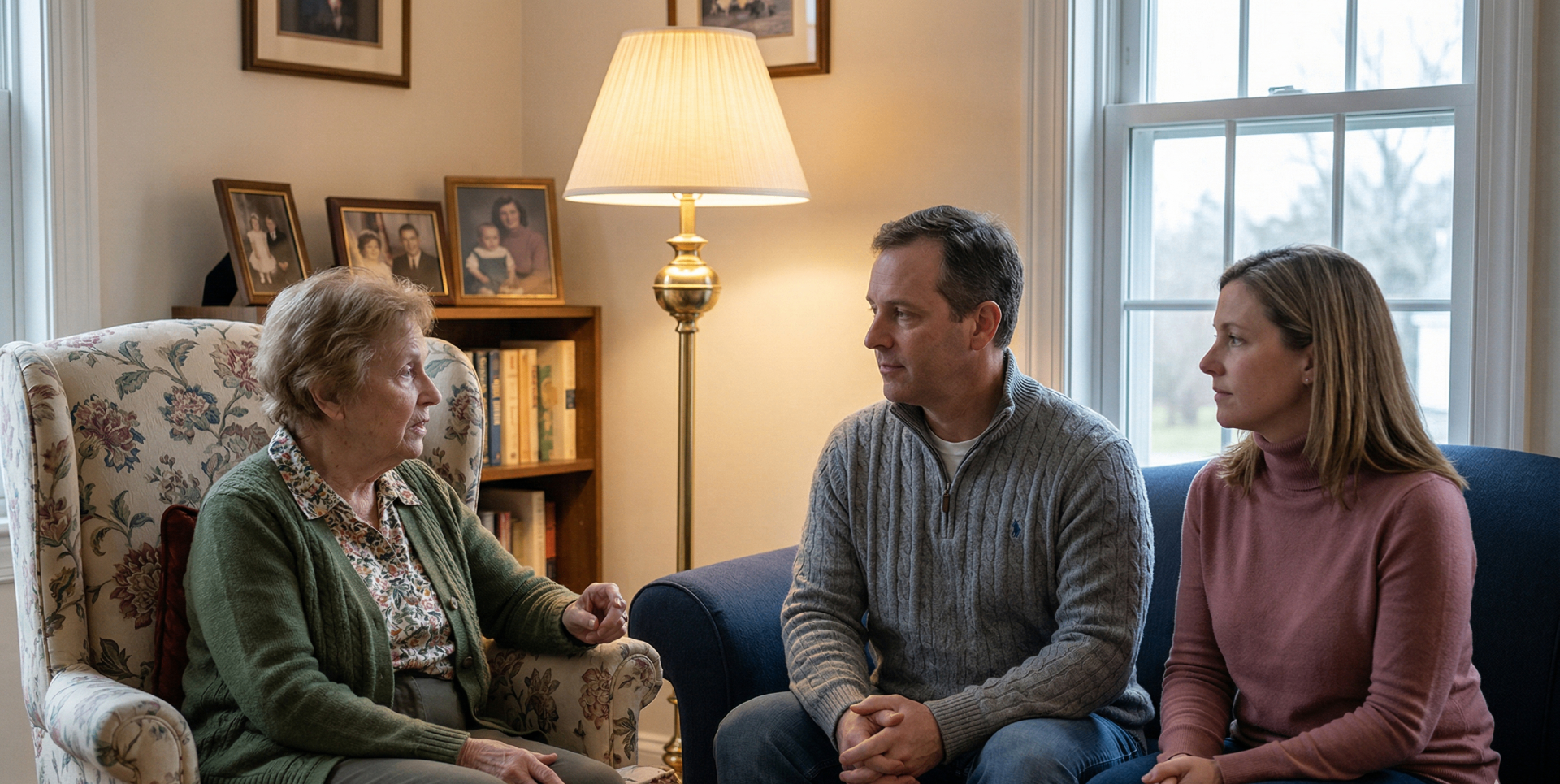
Can Massachusetts take your house if you go into a nursing home?
I hear this question more than almost any other. Adult children call about a parent. Seniors who watched it happen to a neighbor want to know if they are next.
The short answer is yes. After you die, the state can make a claim to get back what MassHealth paid for your care. But whether the state can reach your house depends on what you did, and when you did it.
What MassHealth is
MassHealth is the Massachusetts name for Medicaid. It pays for nursing home care when a person can no longer pay for it.
Nursing homes cost well over ten thousand dollars a month. Medicare pays for a short rehab stay after a hospital visit. It does not pay for long-term care. When the savings run out, MassHealth is what is left.
To qualify, you must be under the income and asset limits. A single person can keep the home (if they plan to return, and the home is not worth more than a limit the state sets), one car, personal belongings, and a small amount of cash. Everything else must be spent down first.
That is the part most people know about. The part they do not know about comes after death.
How the state gets paid back
When a person on MassHealth dies, the state can file a claim against the estate. The claim is for what MassHealth paid for care.
Here is the fact that changes everything. The state can only reach what goes through probate. Probate is the court process for property that was still in your name alone when you died.
A home that passes outside probate is not touched. A home in a properly set up trust passes outside probate. A home under a life estate deed passes outside probate. That is why the two tools below work. They do not just help you qualify for MassHealth. They keep the house out of the state's reach after you are gone.
Two more facts help. For anyone who dies on or after August 1, 2024, the state can only get back what MassHealth paid for nursing home care, certain home care programs, and the hospital and drug bills that went with them. And if the estate is $25,000 or less, the state waives its claim on its own.
Here is what surprises people. The home did not count against you when you applied. MassHealth let you keep it. But "not counted when you apply" and "safe after you die" are two different things. Qualifying is not the same as protecting.
The five-year look-back
When you apply for MassHealth, the state looks at the last five years of your money. Any gift during those five years causes a penalty. A gift means anything you gave away for less than it was worth. That includes gifts to your kids, money moved into a trust, and a house deeded to a family member.
The penalty is not a fine. It is a stretch of time when MassHealth will not pay. Someone still has to pay the nursing home. The bigger the gift, the longer the penalty. For a house, the penalty can run for years.
Families who did not see this coming end up scrambling. They need money for care, and they already gave it away.
One myth causes real damage here. Many people know about the federal gift tax rule that lets you give a certain amount each year with no tax form. That rule is an IRS rule. It has nothing to do with MassHealth. A gift that is fine for taxes is still a gift for MassHealth. If it falls in the five-year window, it causes a penalty.
The two tools that protect the home
An irrevocable trust. This is often called a MAPT. That stands for Medicaid Asset Protection Trust. You put the house in the trust. You keep the right to live there for life. You give up the right to pull the house back out. That is what makes it work.
If the trust is set up right and the five years have passed, the house is not counted when you apply. And because the house is in the trust, it does not go through probate. The state cannot reach it after you die. There are also tax benefits to doing it this way instead of giving the house to your kids. Those are for a real conversation, not a web page.
A life estate deed. You deed the house to your kids now. You keep the right to live there for life. When you die, the house goes to them with no probate. Like the trust, it starts the five-year clock. It is simpler and cheaper than a trust. But it is less flexible. And if the house is sold while you are alive, there is a tax cost for your kids. My article on avoiding probate covers life estate deeds in more depth.
Neither tool works if you wait until the nursing home is days away. By then, any transfer causes a penalty. The families I can help most are the ones who call at 65, not 82.
What "just putting the house in the kids' names" does
I hear this plan a lot. A parent deeds the house straight to the kids. No lawyer. The idea is to get it out of the parent's name before MassHealth can touch it.
It causes three problems.
First, it is a gift. It counts in the five-year look-back like any other gift.
Second, the house now belongs to your kids. Their creditors can reach it. If one of them gets divorced, the house is on the table. If one of them goes bankrupt, the house is part of it. And you have no legal right to stay in your own home. Everyone in the family may assume you do. The law does not.
Third, it can cost your kids a big tax break. When a child inherits a house, the tax rules wipe out the gain that built up over the years. When a child gets the house as a gift while you are alive, that break is lost. For a house bought decades ago, that can mean tens of thousands of dollars in tax when the kids sell. Families often find this out years later, when it is too late to fix.
A properly set up trust avoids all three problems.
Married couples
When one spouse needs a nursing home and the other is still at home, a different set of rules applies. The spouse at home keeps the house, a car, and a meaningful share of the couple's savings. There is also a rule that protects the at-home spouse's monthly income. These rules surprise families who assumed they would lose everything.
But they do not make the picture risk-free. Planning for a couple depends on ages, assets, health, and what you want to leave behind. There is rarely a one-size answer.
The mistakes I watch for
Waiting. This is the big one. The five-year clock is a long runway. But most people do not think about it until a diagnosis or a hospital stay. By then the window has often closed.
Deeding the house to the kids. It starts the clock with none of the protection a trust gives. It creates tax problems. And it leaves you with no legal right to your own home.
Thinking the house is safe because MassHealth let you keep it. Keeping it when you apply and keeping it after you die are two different things. Many families learn this when the state's claim arrives.
Using a revocable living trust for MassHealth. A revocable trust is a great tool for avoiding probate. But you can take everything back out of it. So MassHealth treats it as still yours. Only an irrevocable trust does this job.
Setting up the trust or the deed alone. The trustee, the kids on the deed, your will, and your beneficiary forms all need to work together. A trust that fights with your will creates the mess it was meant to prevent.
Is it too late?
That is the question most families are really asking. Sometimes it is too late, and I will tell you so. More often, there is still time.
The five-year look-back does not have to be a trap. It can be a plan. The families who act at 65 or 70, before any diagnosis, have the most options. The ones who call at 80 after a health scare have a shorter runway. But there are often still moves to make.
If you want to know where you stand, I offer free consultations for families across the South Shore and South Coast. We will look at your situation, talk about what fits, and I will tell you honestly what I would recommend. No sales pitch. No pressure. Just a clear answer.

Jason Cullen, Esq.
Massachusetts estate planning and probate attorney serving the South Shore and South Coast. Career fire captain, paramedic, and Army veteran. Author of the Massachusetts Trustee Handbook.
About Jason →